
Obsessive Compulsive Disorder (OCD) is an incredibly difficult disorder to live with. Exposure and Response Prevention Therapy (ERP) is an evidence-based method that has been shown to be effective for reducing symptoms and distress in individuals with OCD.
OCD obsessive thoughts often result in compulsions, where you feel that you must do something to ease the obsession. As anyone with OCD can testify, doing the compulsion usually doesn’t ease the obsession and anxiety, but it still feels impossible to stop.
ERP helps teach your brain that if you don’t respond to the obsession, it will be okay. You don’t actually need to do the compulsion, and the obsession will fade.
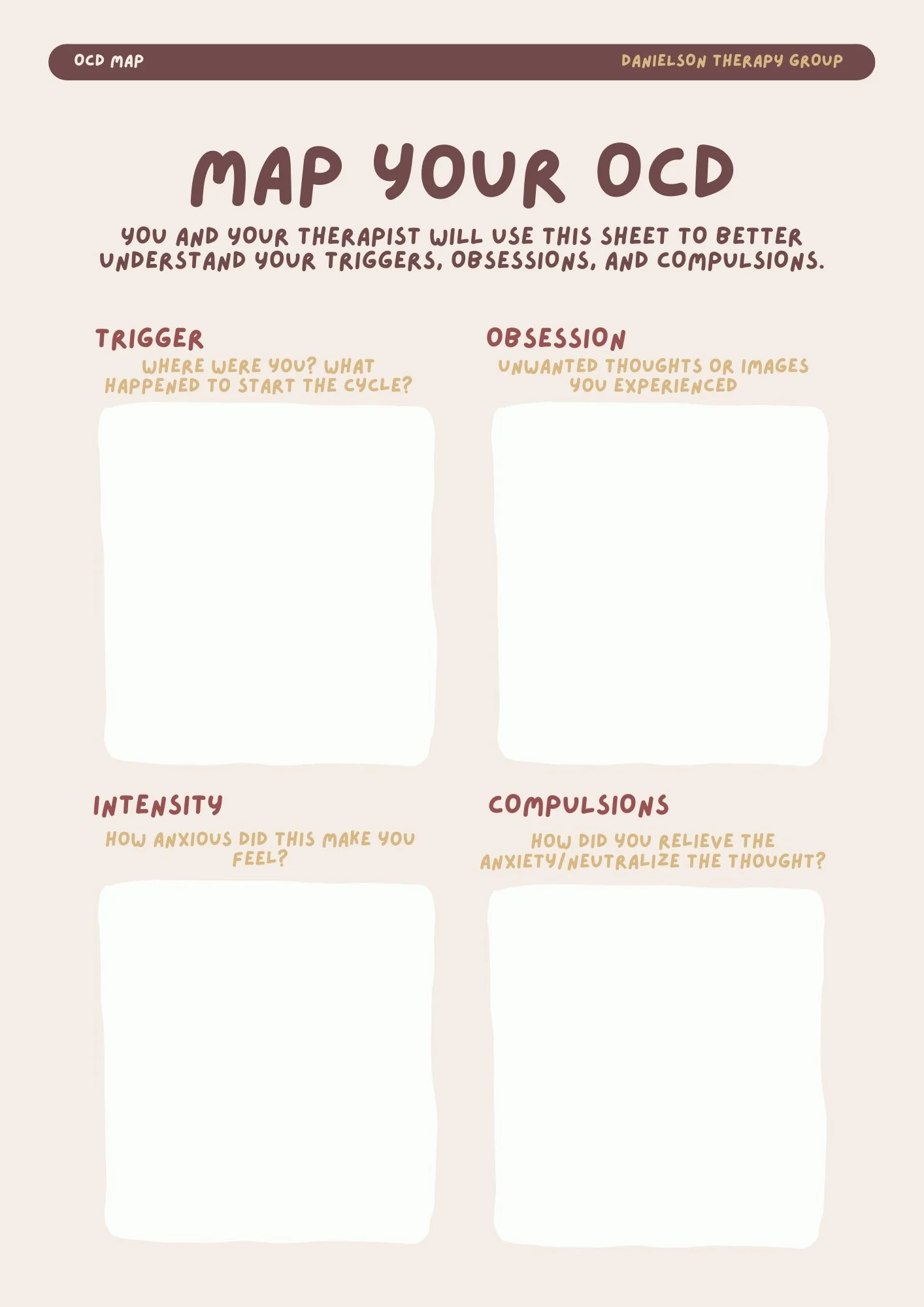
OCD treatment often starts with an OCD thought map.
This consists of identifying the trigger, the intrusive thought, the maladaptive interpretation, the negative emotion, and the maladaptive coping strategy. Next, you will make a hierarchy of your various triggers for obsessions and compulsions, and determine where to start the exposure.
Once you have a more clear understanding of your OCD, the actual ERP begins. In the safe and controlled environment of therapy sessions, you will be exposed to something that causes an obsessive thought (dirt on your hands, an image, a task, etc.). You will then resist the compulsion for an amount of time decided by you and your therapist.
You are showing your brain that you can handle the discomfort, and that you’re okay.
After the amount of time has passed, you will have an opportunity to engage in the compulsion (or keep resisting if you’re up for it), and process the experience with your therapist. You will continue to practice preventing your response to the exposure in sessions and at home, and start slowly re-training your brain to be able to handle obsessive thoughts with much less stress and anxiety.
As you can imagine, this is much easier said than done. It is difficult and painful to resist, and allow yourself to sit in discomfort. You and your therapist will decide what you can handle, and you are always in full control of the situation. It will take time and effort to re-train your brain. You are capable of it if you choose, and your therapist is there to support you every step of the way.
OCD is an intense, frustrating, and painful disorder, but it doesn’t have to ruin your life. Reach out to us here at Danielson Therapy Group to learn more about how we can help reduce your OCD symptoms and distress using ERP.

Written by Liza Pierson, LMFT.
She specializes in OCD, anxiety, and trauma here at Danielson Therapy Group.
